Skip to content
Buffalo Foundation Repairs

Serving Buffalo and nearby areas

Water in Basement in Buffalo, NY

Water in your Buffalo basement means water is finding a way through the wall, the floor or a drain, and a free inspection shows which one and what it costs to stop.

Book a free foundation inspection

Tell us what you are seeing. A local specialist calls you back the same business day.

Local to Buffalo

We connect property owners in Buffalo and nearby areas, including North Buffalo, South Buffalo, Elmwood Village, Allentown, Amherst and Cheektowaga, with one independent local foundation repair specialist.

  • About 95 inches of snow

    Buffalo gets about 95 inches of snow in a normal year. When it melts, most of that water lands in the soil next to your house within a few weeks.

  • Clay holds water

    Buffalo sits on an old lake bed with a lot of clay. The U.S. Army Corps of Engineers found water pressure was one of four forces pushing on basement walls in Amherst.

  • Older drains

    About 61 percent of homes in the city were built in 1939 or earlier. Clay drain tile from that era is often clogged or crushed, or was never put in.

What it costs

Typical published ranges for Buffalo. The contractor's written estimate is the price, and the inspection is free.

WorkTypical range
Inspection and written estimate Free
Seal one leaking crack $250 to $1,000
Regrading around the house $500 to $3,000
Sump pump, installed $600 to $2,500
Interior drain $40 to $120per linear foot
Interior waterproofing, whole job $2,000 to $6,000
Exterior waterproofing, whole job $7,000 to $15,000

See typical foundation repair prices in Buffalo

What water in the basement looks like

Water does not always show up as a puddle. In a Buffalo basement it often starts small and grows each spring.

A wet line at the floor

Water seeps in where the wall meets the floor slab, and a dark strip forms along the bottom of the wall.

A puddle near one wall

One corner or one wall stays wet. That usually points to a downspout, a low spot in the yard or a crack on that side.

Water on the whole floor

The floor gets wet in many spots at once. That can be water coming up from under the slab.

A trickle from a crack

You can watch water run out of a crack after rain. This is the easiest kind to find and fix.

Water after every melt

The basement stays dry most of the year but floods each time the snow goes.

Water from the floor drain

Water rises out of the drain in a big storm. That is often a backup, not a leak in the wall.

Take photos with the date. The inspector learns a lot from where the water was and when it showed up.

Why Buffalo basements take on water

Snow melt with a frozen lid

Buffalo gets about 95 inches of snow in a normal year. NOAA data for the city lists a 50-year frost depth of 59 inches. In a thaw, the top few inches of soil melt first. The frozen soil below works like a lid, so melt water cannot drain down. It moves sideways until it hits your wall. That is why so many Buffalo basements leak in March and stay dry in July.

Big thaws can do real damage. In February 1985 a fast thaw melted a 3-foot snowpack in a few days. The National Weather Service recorded flooded basements across Amherst and South Buffalo.

Clay that will not drain

The city sits on the Erie Plain, the bed of old glacial lakes. Much of the soil is clay. Clay drains slowly, so water sits against the wall for days after a storm. The U.S. Army Corps of Engineers named water pressure as one of the four forces that push on basement walls in Amherst.

Old walls and old drains

About 61 percent of homes in Buffalo were built in 1939 or earlier. Many sit on stone or early block walls. The mortar in stone walls wears thin and lets water through. Block walls are hollow, so water that gets into the block can fill the cores and leak out low on the wall. The clay drain tile around many old houses is clogged, crushed or missing.

Roof water dumped at the wall

A short downspout can put hundreds of gallons of roof water right next to the foundation in one storm. Many older Buffalo neighborhoods also have combined sewers that carry both storm water and household drains. The Buffalo Sewer Authority has pushed downspout and rain barrel programs to keep roof water out of those pipes.

When it is minor and when it is urgent

Minor

A damp strip that dries out in a day or two, with no wall movement. Fix gutters and downspouts first and watch it.

Plan a fix soon

Water on the floor after most heavy rains or every spring, or a crack that runs water. Each wet season soaks the wall and anything stored nearby.

Call now

Water coming in fast, water near the furnace or electrical panel, or water along with a wall that leans in or has a long sideways crack. Wet clay is heavy, and water plus wall movement often travel together.

Different problem

Water and sewage rising out of a floor drain or toilet. Shut off your water. If you think it is the city sewer, call 311.

How the leak usually gets fixed

The right fix depends on where the water comes in. Good inspectors trace the path before they price anything.

  1. Outside first. Clean gutters, extend downspouts at least several feet from the wall, and fill low spots so the ground slopes away. This is cheap and sometimes is enough.
  2. Seal a single crack. If the water comes from one crack in a poured wall, it can be sealed from the inside.
  3. Inside drain and sump pump. A crew cuts a channel in the floor along the walls, lays a perforated pipe, and runs it to a sump pump. This is the most common fix for old Buffalo basements with water at the floor joint.
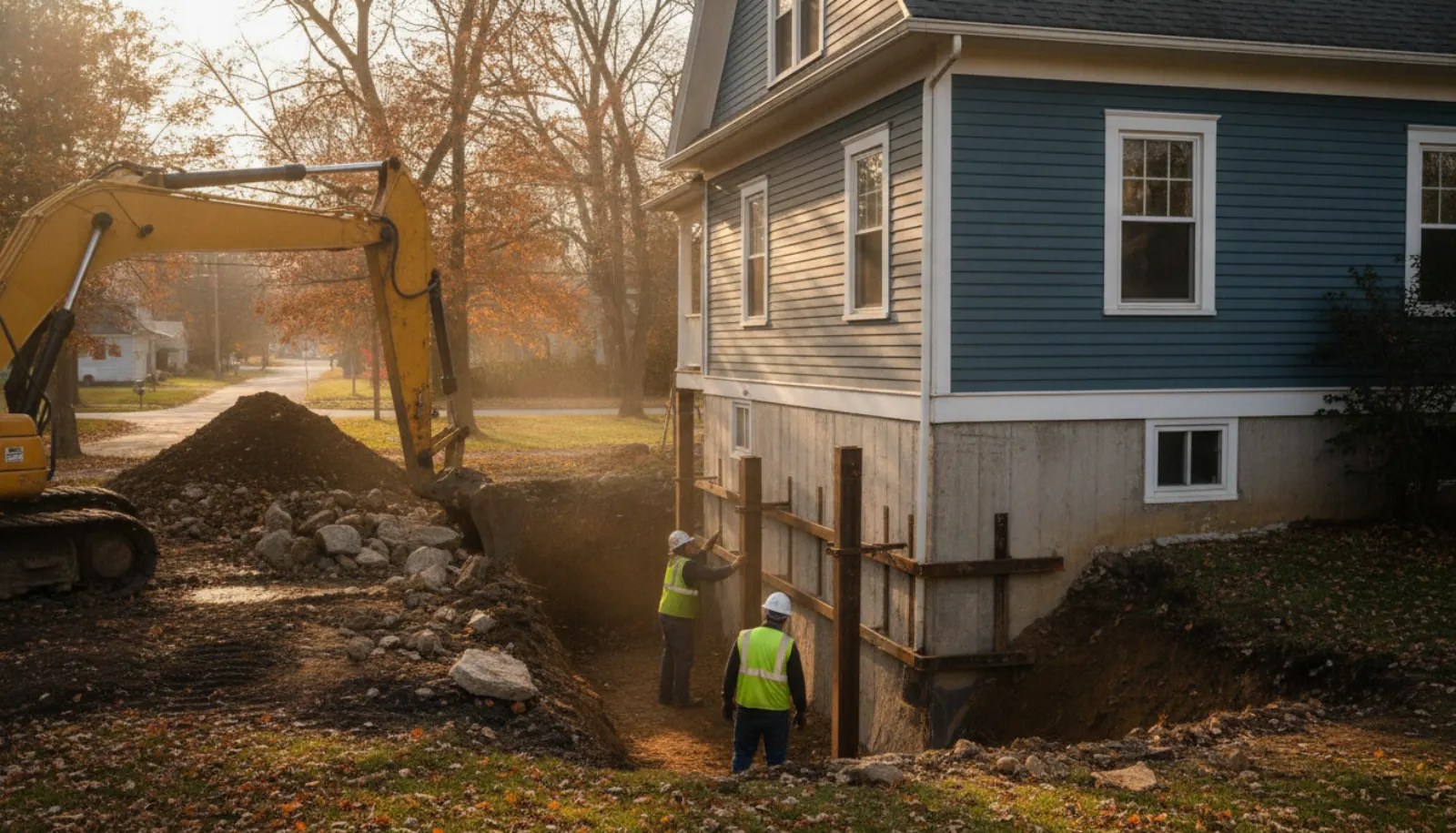
  4. Dig and seal the outside. The crew digs down to the footing, seals the outside of the wall and adds new drain tile. It costs more and tears up the yard, but it stops water before it touches the wall.

The table below shows typical ranges from national cost guides. Your written estimate gives the real number for your house.

What to do before the inspection

  • Move boxes, rugs and anything that can mold off the floor and away from the wet wall.
  • Run a dehumidifier and empty it often.
  • Point every downspout away from the house, even with a temporary extension.
  • Mark where the water reached with tape and the date.
  • Check whether you have a sump pump and whether it runs.
  • Call your insurance agent and ask what your policy covers for water.

Frequently asked questions

Why does my basement only leak in spring?

In late winter the top of the soil thaws while the ground below is still frozen. Melt water cannot soak down, so it runs sideways into your basement wall. Once the ground thaws all the way, the leak often stops until next year.

Is a little water in an old Buffalo basement normal?

Many older basements get damp, but water on the floor is not something you have to live with. It wets stored things, feeds mold and keeps pressure on the wall. Most leaks can be stopped.

Can I fix a wet basement from the inside?

Often, yes. An inside drain along the bottom of the wall carries water to a sump pump, which pumps it out. It does not stop water from reaching the wall, but it keeps it off your floor.

Does homeowners insurance cover water in the basement?

Usually not for slow seepage through the wall. Water that backs up through a floor drain is often left out too unless you added a water backup endorsement. Ask your agent before you need it.

Water came up through my floor drain. Is that a foundation problem?

Probably not. Water rising out of a floor drain in a big storm is usually a sewer or drain backup. Shut off your water, call 311 if you think it is the city sewer, and tell the inspector so they look at the right thing.

(716) 621-3279 Free inspection